- Unintended harm to other organisms: Last year a laboratory study was published showing that pollen from GM corn caused high mortality rates in monarch butterfly caterpillars. Monarch caterpillars consume milkweed plants, not corn, but the fear is that if pollen from GM corn is blown by the wind onto milkweed plants in neighboring fields, the caterpillars could eat the pollen and die. Although the study was not conducted under natural field conditions, the results seemed to support this viewpoint.
- Reduced effects of pesticides: Just as some populations of mosquitoes developed resistance to the now-banned pesticide DDT, many people are concerned that insects will become resistant to GM crops sprayed with pesticides.
- Gene transfer to non - target species: Another concern is that crop plants created for herbicide tolerance and weeds will cross-breed, resulting in the transfer of the herbicide resistance genes from the crops into the weeds. These "superweeds" would then be herbicide tolerant as well.
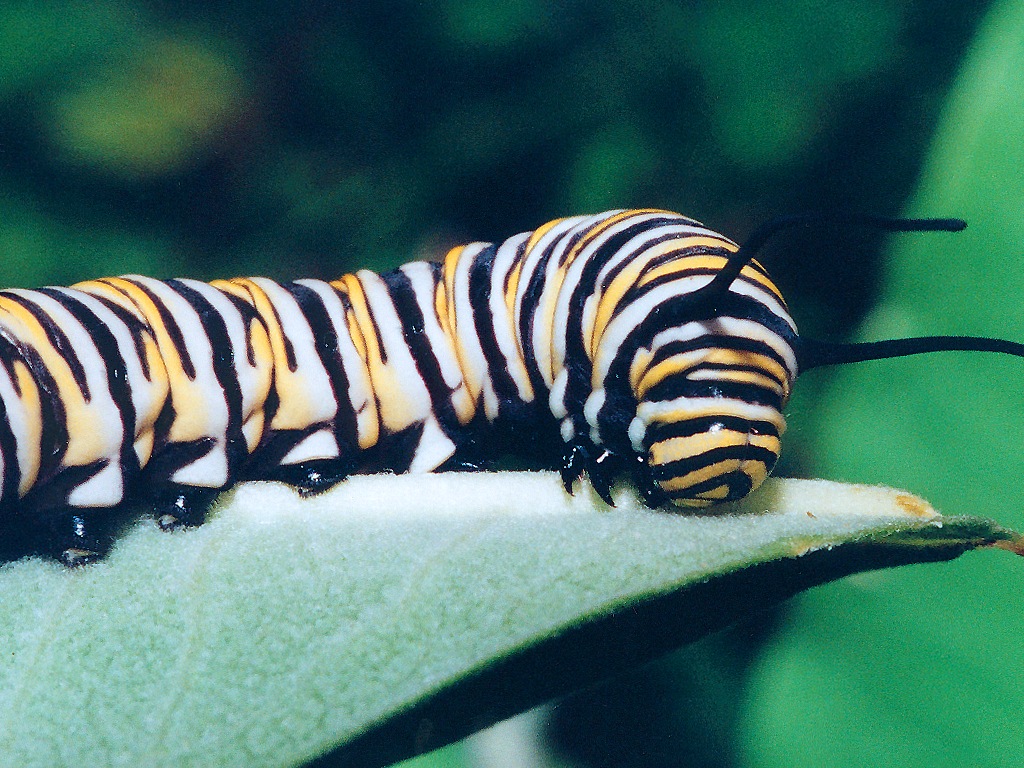
However, there are solutions to these problems. Genes are exchanged between plants via pollen. Two ways to ensure that non-target species will not receive introduced genes from GM plants are to create GM plants that do not produce pollen, or to modify the GM plant so that the pollen does not contain the introduced gene. Cross-pollination would not occur, and if harmless insects such as monarch caterpillars were to eat pollen from GM plants, the caterpillars would survive.
Another possible solution is to create 'buffer zones' around fields of GM crops. For example, non-GM corn would be planted to surround a field of GM corn, and the non-GM corn would not be harvested. Beneficial or harmless insects would have a refuge in the non-GM corn, and insect pests could be allowed to destroy the non-GM corn and would not develop resistance to the pesticides. Also, gene transfer to weeds and other crops would not occur because the wind-blown pollen would not travel beyond the buffer zone.
Human health risks:
- Allergenicity: Many children in Europe have developed life-threatening allergies to peanuts and other foods. There is a possibility that introducing a gene into a plant may create a new allergen or cause an allergic reaction in certain individuals. A proposal to incorporate a gene from Brazil nuts into soybeans was abandoned because of the fear of causing unexpected allergic reactions. If ideas like this eventually go ahead,
labeling of GM foods and food products will acquire new importance.
- Unknown effects on human health: There is a growing concern that introducing foreign genes into food plants may have an unexpected and negative impact on human health. A recent article examined the effects of GM potatoes on the digestive tract in rats. This study claimed that there were appreciable differences in the intestines of rats fed GM potatoes and rats fed unmodified potatoes. Yet critics say that this paper, like the monarch butterfly data, is flawed. Also, the gene introduced into the potatoes was a snowdrop flower lectin, a substance known to be toxic to mammals.

On the whole, with the exception of possible allergies, scientists believe that GM foods do not present a risk to human health.
Economic concerns:
On the whole, with the exception of possible allergenicity, scientists believe that GM foods do not present a risk to human health. Yet consumers are worried that patenting these new plant varieties will raise the price of seeds so high, that small farmers and third world countries will not be able to afford seeds for GM crops, thus widening the gap between the wealthy and the poor.
Patent enforcement may also be difficult. One way to combat possible patent infringement is to introduce a "suicide gene" into GM plants. These plants would be viable for only one growing season and would produce sterile seeds that do not germinate. Farmers would need to buy a fresh supply of seeds each year. However, this would be financially disastrous for farmers in third world countries who cannot afford to buy seed each year.
The safety of GM foods is still being debated, as it is impossible to predict all of the potential effects on human health and the environment. Some public health experts, however, advise caution and believe that ‘we are only at the "scientific starting line", we simply don’t know whether GM foods are safe’.
References: http://www.csa.com/discoveryguides/gmfood/overview.php

No comments:
Post a Comment